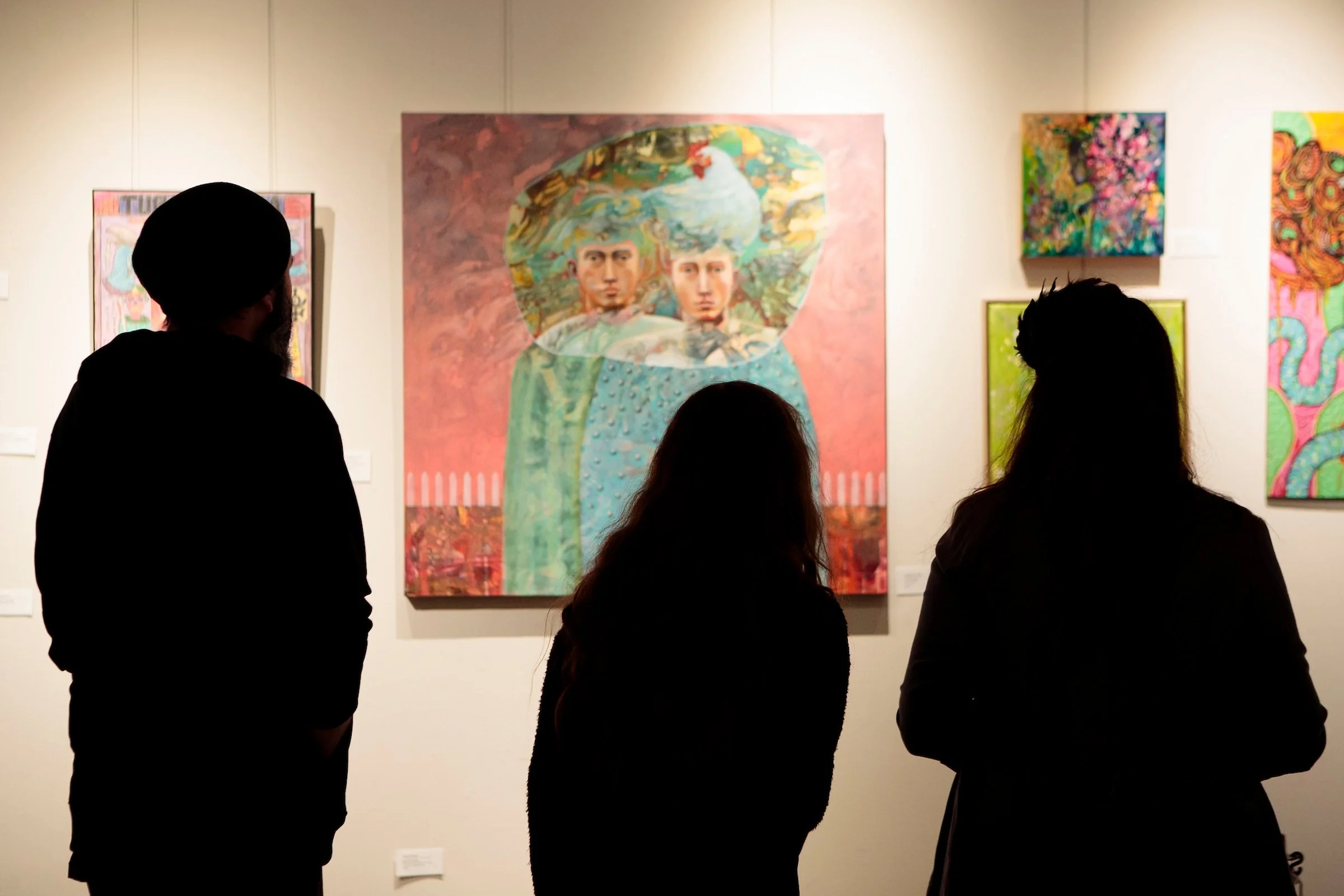
Delirium photo by Matt Wright Photography
The Hidden Economics of a 20-Piece Solo Art Exhibition
Nothing compares to seeing art in person. Standing in front of a painting, noticing the texture of the brushwork, the scale of the canvas, the subtle shift of light across a surface—these are experiences that simply cannot be replicated on a screen. On so many museum visits, we have seen people brought to tears as they looked at art. We, ourselves have wept on a couple occasions. Art is powerful. A few artist friends have recently been faced with the financial impact of success with offers to show in museum solo shows. The museums, in most cases to not pay for preparation, framing and specific fabrications needed. This burden falls on the artists.
Recently, we have been thinking a lot about the vision we had when founding Juniper Rag. It really has not changed much. What has changed is how much we now know about the art world and managing exhibitions and collaborations. Artists live for incredible opportunities, but there is a financial reality and massive burden incurred by artists that earn big opportunities. Be careful what you wish for. A solo museum exhibition can cost artists over $25K, a gallery exhibition can cost over $8K and even for the super scrappy cost saving masterminds, you are still looking at $4K or more for materials and marketing, never mind the consideration of time.
At Juniper Rag, we go on record saying exactly that: art deserves to be experienced in real space. There is no comparison.
What we do is advocate, strategize and host virtual and in-person exhibitions, artist features and collaborative relationships that can boost your footprint in this world. Your network is everything and these virtual exhibitions help you share are relatively no expense. You can’t afford not to participate in 3-4 a year and align your work with agile, mission driven organizations that assist you with promotion and marketing for very low costs and basically, less than an hour of commitment to submit. The social media bump is a passive way for you to add valuable content for your business. Our head still spins because some just never share and take full advantage of their inclusion in these strategic shows. Momentum is delicate, so TAKE FULL ADVANTAGE of your virtual exhibition posts and magazine features. Content and sharing for days. Be sure to tag and celebrate these moments.
[We have other blog posts about this.]
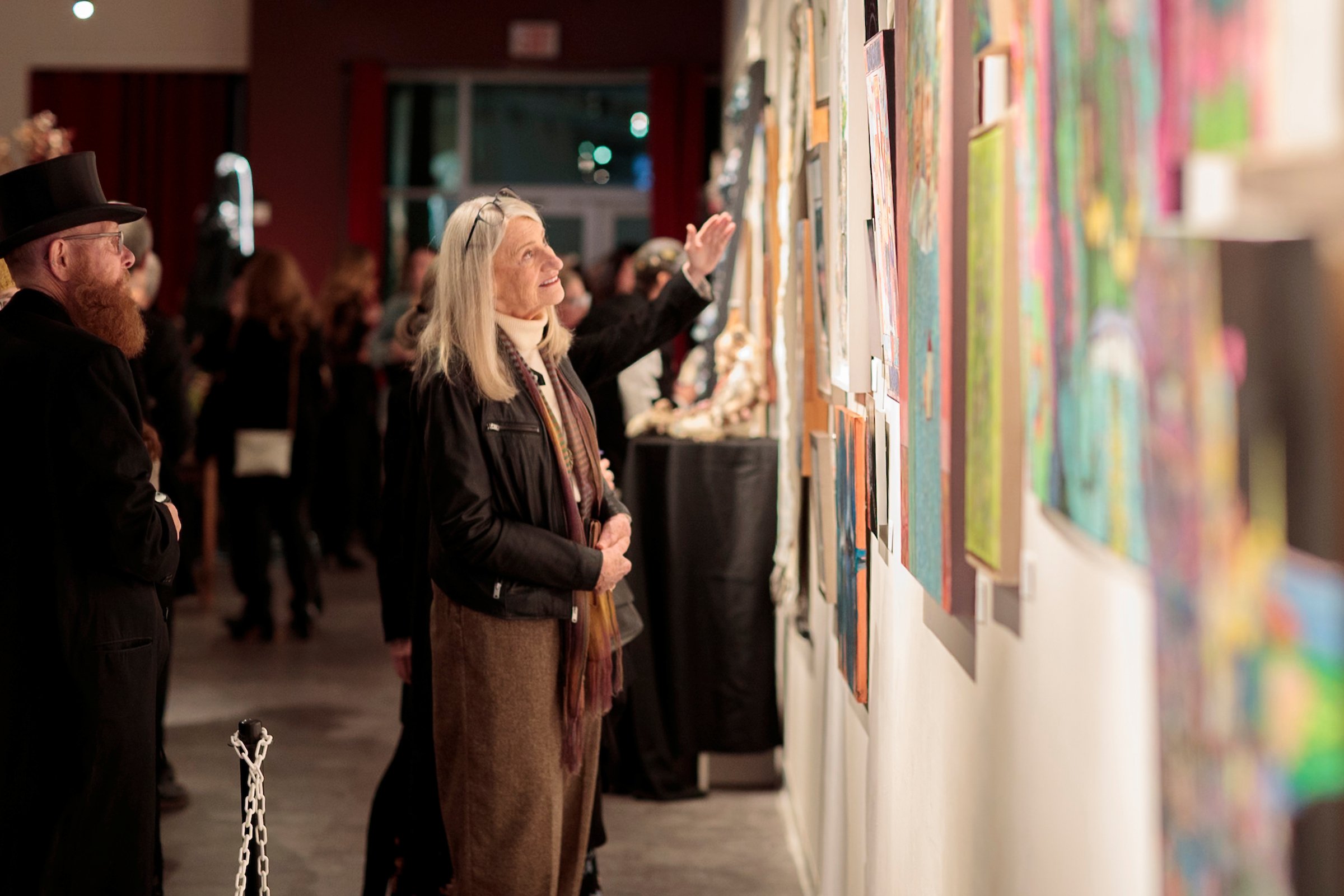
Karen Nunley and Howard Johnson at DELIRIUM by Juniper Rag in collaboration with THT REP/Hanover Theatre and JMAC.
Your submission fee of $35 for our exhibitions helps to support our overhead—and gives you months of social media content, our support, a visual home for your work while the exhibitions are up and more. We form relationships with our artists that make efforts to have one. Engage! Our community of vibrant artists is on fire with creative energy! Just ask the artists of DWELL, ART SHOP or way back to our 1st magazine. We still celebrate these artists on social because of relationships.
But there is another truth artists rarely talk about publicly. Physical gallery exhibitions are expensive, and that cost is usually quietly carried by the artist and we can attest that art lovers have NO IDEA about the costs of materials, studio space, social media, marketing. Plus, all of the logistical hoops that artists have to jump through to pull off exhibitions. Art is a true commitment. Art-making is expensive and we can’t stop. Ever.
This is is a long post with a lot of math,
so bookmark and return when you need to reference it later. Hopefully it will help you think of costs in a new way, inform the management of costs and help artists to price correctly for their demand and to cover your spending. Remember to price for your market, and for goodness sake, work up to higher prices. Very few emerging artists can sell a piece for over $2500, $4000 or more. Traditionally, you have to have a track record of price increases, demand and popularity to support these high prices. There are exceptions to the rule. We see a lot of artists who overcharge for art and probably have a hard time selling. Know your market, your geotargetted location markets and ask the pros their opinion. Build your community, ask for advice and mentorship and learn the economic strategies of skill, popularity, supply, demand, and pricing. Artists who work big out of the gate, well, you have it the worst. Bigger paintings automatically increase your bottom line.
Hopefully, collectors will read this too and really start to understand the value of the pieces that hang on their walls, the stories behind them and the drive and financial commitment of the artists to make it. Behind every polished opening reception and pristine gallery wall is a long list of logistical, financial, and emotional investments that most viewers never see or hear about.
Let’s break down what it really costs for an artist to present 20 works in a traditional gallery exhibition.
One big tip for artists:
Calculate your material costs per painting size and use it to guide your pricing. You know the cost of paint, solvents, canvas, and brushes—now determine how much of each goes into every piece. Many artists never really consider this. Impasto = $$, for example.
What Artists Actually Pay for a 20 Piece Solo Exhibition
While the exact numbers vary by location and gallery type, most exhibitions involve similar categories of expenses: materials, production, framing, transportation, insurance, promotion and event costs. Canvas alone can be a drastic scale between 40 and
Below is a typical breakdown for an artist preparing a 20-piece exhibition.
1. Artwork Production & Studio Materials
Costs to physically create the work.
Typical expenses for painters, for example
Substrates: Canvas, wood panels or specialty paper
Paint, pigments, mediums, varnish
Sculptural materials or fabrication
Studio utilities and consumables
Estimated Materials Costs
Average materials per piece: $150 – $400. A 60 × 60 inch canvas can cost over $600.
For 20 works:
$3,000 – $8,000
2. Professional Framing and Presentation
Framing is often required for gallery presentation for works on paper and on canvas or cradled board, depending on the gallery and can dramatically increase costs.
Typical expenses
Custom frames or frames made by the artists
Conservation matting or technical skill of the artist to cut their own
Museum glass, a must to reduce glare and reflections.
Hanging hardware for gallery readiness
Custom framing for medium works can range from $300 to $800 or way more per piece, depending on size, materials and glass quality.
Estimated cost
$300 – $800 × 20 works
$6,000 – $16,000
*Framing costs are more than the materials. $200 is the cheapest basic frame and for 20 pieces, that is $4K.
3. Transportation and Crating
Artwork must arrive safely and professionally packed.
Typical expenses can get very high, very quickly.
Packing materials or professional crating, boxes, protective corners, padding, foam, glassine paper- a roll can be $30, plastic bags for waterproofing- a box $45, etc.
Fine art shipping services can greatly vary depending on how big the box is and how much it weighs.
Courier or freight fees
Handling labor
Shipping individual works can range widely depending on size and distance.
Estimated cost of shipping 20 pieces for exhibition.
Some costs are so high, artists rent trucks and drive them across country to manage care and save money. So, this also involves hotel expenses.
$75 – $300 per piece average
$1,500 – $6,000
Add at least $4K more for truck rental, gas, hotel accomodations
4. Insurance
Professional galleries often require nail-to-nail insurance, covering artwork from studio to gallery and back.
Insurance typically runs around 0.1–0.3% of the insured value of the artwork.
Many artists skip this step and take the risks, but some galleries insist on having insurance in place.
Example:
Exhibition value: $200,000
Insurance estimate:
$200 – $600
5. Marketing and Promotion
Many exhibitions require artists to contribute to promotional efforts.
Typical expenses
Printed invitations and postcards
Poster printing
Social media advertising
PR or writing exhibition texts
Interviews
Podcasts
Graphic Design
Print runs and marketing materials alone can cost $300–$800 or more depending on what you want printed.
Estimated costs
$500 – $2,000
6. Opening Reception Contributions
Openings create buzz but can also involve costs.
Typical expenses
Catering
Wine and beverages
Event staffing
Lighting professional and décor
Large openings can cost thousands of dollars and sometimes artists are asked to contribute.
Estimated artist contribution
$300 – $1,000
7. Application Fees or Gallery Participation Fees
Some exhibitions require upfront fees.
Typical expenses
Submission fees
Hanging or participation fees
Rental contributions
Fees can range from $20 submissions to $1,000+ exhibition participation fees depending on the venue, gallery or art fair.
Estimated cost
$20 – $10,000
*This physical show amount is very important and part of why Juniper Rag exhists.
Estimated Total Cost for a 20-Piece Exhibition
Production: $3,000 – $8,000
Framing: $6,000 – $16,000
Shipping & Transport: $1,500 – $6,000
Insurance: $200–$600
Marketing: $500–$2,000
Opening Reception: $300 – $1,000
Application / Participation Fees: $100 – $10,000
Total Estimated Investment
$11,600 to $45,600-$60K or more
This number doesn’t include the artist’s time, studio rent, or the commission a gallery takes from sales.
Most commercial galleries take 40–50% of the sale price, which means artists must price work carefully to cover their investment.
In reality, many artists spend months preparing a show and may still lose money if sales are modest.
The pricing of the artist also comes into play here. (See the breakdown below)
Art must be priced right in order to actually make any money.
Why Do Artists Still Do It?
Despite the costs, physical exhibitions remain irreplaceable. Collectors build meaningful relationships with artists in gallery settings, curators discover new voices in real time, and communities gather around tangible objects in shared space. Seeing art in person activates something primal—the scale, materiality, and atmosphere create an experience that screens simply cannot replicate. At Juniper Rag, we believe deeply that the physical experience of art matters.
But the art world is evolving.
While traditional exhibitions carry significant logistical and financial burdens,
virtual exhibitions are dramatically lowering the barrier to entry for artists.
Platforms like Juniper Rag are helping shape a hybrid future where artists can present their work to global audiences without the immense upfront risk. Without the need for shipping, framing, or installation, artists can focus more on the work itself rather than the cost of presenting it.
Virtual exhibitions also expand reach in ways physical shows cannot. International collectors can engage instantly, exhibitions remain accessible long after an opening night ends, and emerging artists gain opportunities to show their work without major financial investment. There is also a longevity to digital exhibitions—rather than disappearing after a few weeks, they can continue to live, circulate, and connect with audiences over time.
The shift is not about replacing physical exhibitions, but about expanding access. The future belongs to artists who can move fluidly between both worlds.
A New Exhibition Ecosystem
The future of the art world is here and it’s not just physical or digital. It is both.
Physical exhibitions remain powerful cultural events, while virtual exhibitions expand access, equity, and discovery at very low costs to artists.
Platforms like Juniper Rag are helping build a model where:
Artists can exhibit without financial strain
Collectors can discover work globally
Communities can engage with art beyond geographic limits.
Because while nothing replaces seeing art in person…Juniper Rag believes that every artist deserves a chance to be seen in as many places as possible to build a following. It is a long game, the art biz. We are here for it.
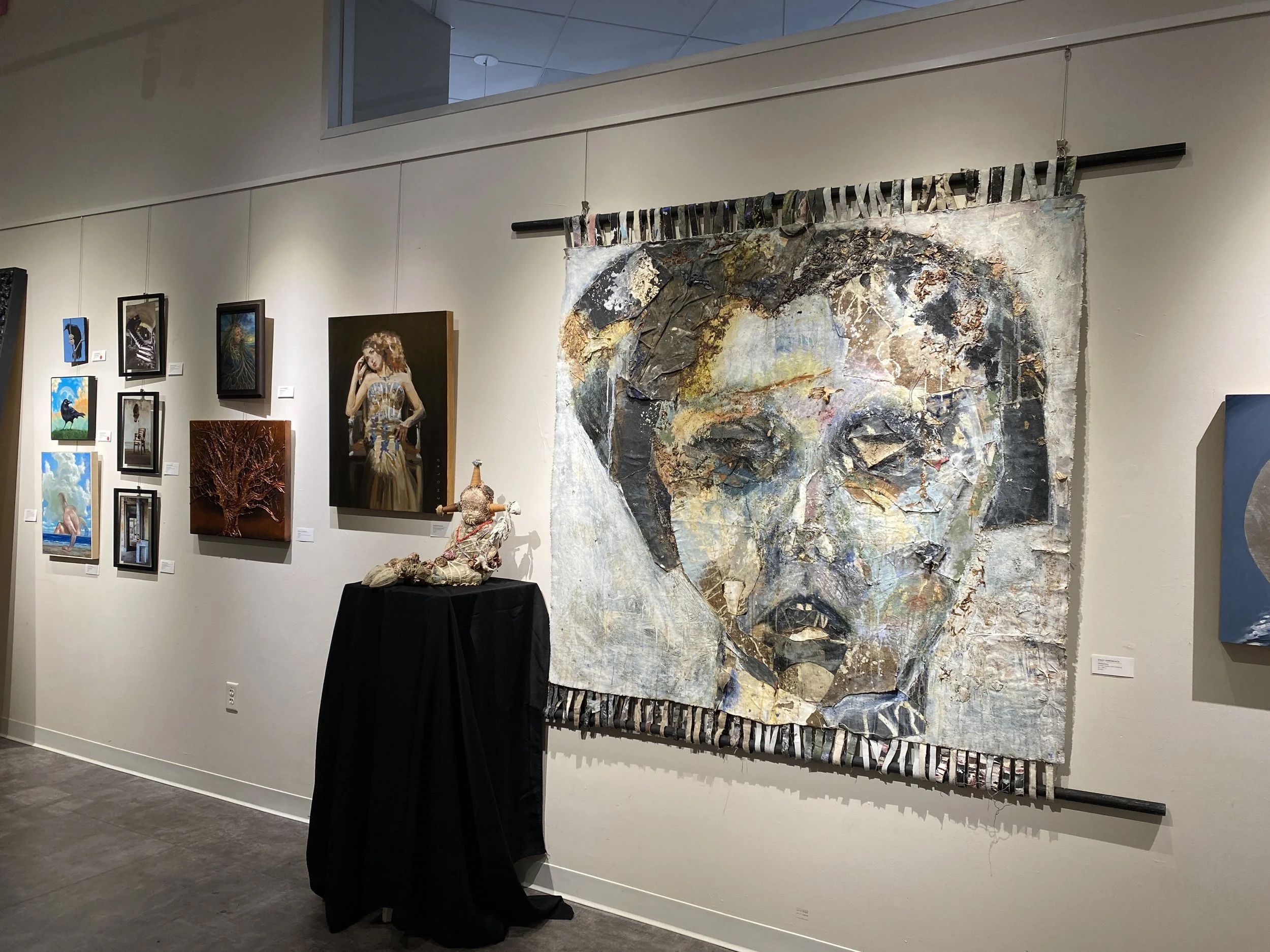
A group opportunity by Juniper Rag Delirium Exhibition, a collaboration with THT Rep/Hanover Theatre and JMAC
Let’s do some real math—
To calculate the necessary retail price per piece, we need to account for two things:
Total exhibition investment
Gallery commission (40%), meaning the artist keeps 60% of the retail price
If an artist shows 20 pieces, the math works like this:
Artist receives 0.6 × retail price
Total artist revenue from the show = 20 × 0.6 × retail price
That must equal the total exhibition cost to break even.
Because: 20 × 0.6 = 12
So effectively: Retail price per piece = Total exhibition cost ÷ 12
1. The Break-Even Retail Price Per Piece
Low-cost exhibition scenario
Total investment: $11,600
Retail price per piece:
$11,600 ÷ 12 = $966.67
Rounded:
≈ $975 per piece
Artist receives:
$975 × 60% = $585
$585 × 20 works = $11,700 (break even)
High-cost exhibition scenario
Total investment: $35,600 (not considering big 10K art fair costs for now)
Retail price per piece: $35,600 ÷ 12 = $2,966.67
Rounded: $3,000 per piece
Artist receives:
$3,000 × 60% = $1,800
$1,800 × 20 works = $36,000
Just to break even…
Total Show Cost $11,600 low, $35,600 high
Retail Price Per Piece $975 low, $3,000 high
Artist Receives Per Piece $585 low, high $1,800
2. Retail Prices Needed to Double the Investment
To double the investment, the artist must earn 2 × the total cost of each piece of art.
Formula:
Retail price per piece = Total cost ÷ 6 (because the artist keeps 60% of 20 works = 12 shares, and doubling cost requires 2C ÷ 12)
Low-cost exhibition doubling investment
Total cost: $11,600
Retail price per piece: $11,600 ÷ 6 = $1,933
Rounded: $1,950 per piece
Artist receives:
$1,950 × 60% = $1,170
$1,170 × 20 = $23,400
Profit after costs: $11,800
High-cost exhibition doubling investment
Total cost: $35,600
Retail price per piece: $35,600 ÷ 6 = $5,933
Rounded: $6,000 per piece
Artist receives:
$6,000 × 60% = $3,600
$3,600 × 20 = $72,000
Profit after costs: $36,400
Pricing Summary
Scenario
Retail Price Per Piece
Artist Net From 20 Works Break Even (Low Cost Show) $975~$11,700
Break Even (High Cost Show) $3,000~$36,000
Double Investment (Low Cost Show) $1,950~$23,400
Double Investment (High Cost Show) $6,000~$72,000
The Reality Most People Don’t See
For many emerging artists, pricing work below $1,000 actually makes a traditional exhibition financially impossible, once framing, shipping, and commissions are considered.
This is one of the reasons virtual exhibitions and digital platforms like Juniper Rag are becoming essential toolsfor artists:
no shipping
no framing requirements
no installation logistics
global collector access
Artists can present work without risking $10k–$35k before a single piece sells.
And yet—despite the economics—nothing replaces the experience of seeing art in person.
Which is why the future likely belongs to a hybrid model: physical exhibitions for cultural impact, and digital platforms for access and sustainability.
If you'd like, I can also show you something very eye-opening for artists:
The “Gallery Pricing Ladder”
(a simple formula that explains why so many successful painters end up pricing work at $5k–$15k once they regularly exhibit).
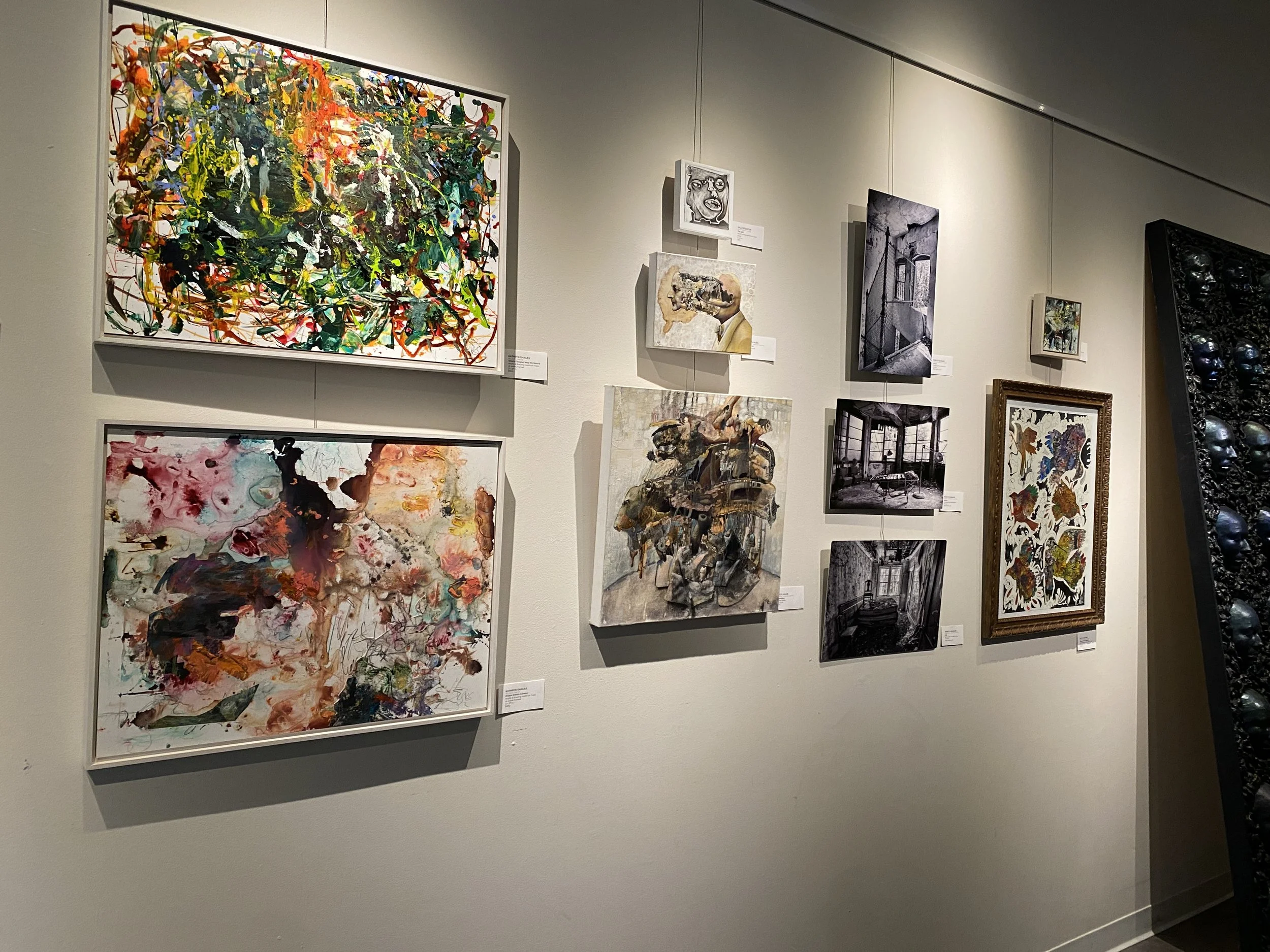
A group opportunity by Juniper Rag Delirium Exhibition, a collaboration with THT Rep/Hanover Theatre and JMAC
If the model is super lean—something very much in line with how a scrappy, well-networked platform artist might approach a show—the economics shift dramatically in the artist’s favor.
Let’s break it down cleanly.
Total Investment (20 Pieces, Lean Model)
Per piece production cost
$200 × 20 works = $4,000
Marketing + reception (shared budget)
$400
Total Exhibition Cost: $4,400
Break-Even Pricing (with 40% Gallery Commission)
Artist keeps 60%, same as before.
So:
20 works × 0.6 = 12 effective units
Retail price per piece: $4,400 ÷ 12 = $366.67
Rounded: $375 per piece to break even
Artist receives:
$375 × 60% = $225 per piece
$225 × 20 = $4,500 total
Pricing to Double Investment
To double: $4,400 × 2 = $8,800
Retail price per piece: $4,400 ÷ 6 = $733.33
Rounded: $750 per piece to double investment
Artist receives:
$750 × 60% = $450 per piece
$450 × 20 = $9,000 total
Summary
Scenario
Retail Price Per Piece
Break Even: $375
Double Investmen: $750
Artist Net (20 works) $4,500- $9,000
What This Changes (& Why It Matters)
This is where things get interesting—and honestly, a bit disruptive. This is why we offer some virtual shows with capped price points.
At this level:
Work priced under $500 becomes viable
Emerging collectors can participate
Artists reduce financial risk dramatically
Sell-through becomes far more realistic
Instead of needing to hit $3,000+ per piece just to survive, an artist can:
break even at accessible price points
build a collector base faster
and create momentum instead of pressure
This kind of model rewards frequency, community, and smart curation over overhead—which is exactly where platforms like Juniper Rag have a strategic advantage.
The Bigger Insight
When and if you manage your cost structure as an emerging artist, or a mid-career artist, you don’t have to lower prices—you fundamentally change who gets to collect art. That’s where a real shift in the market begins.