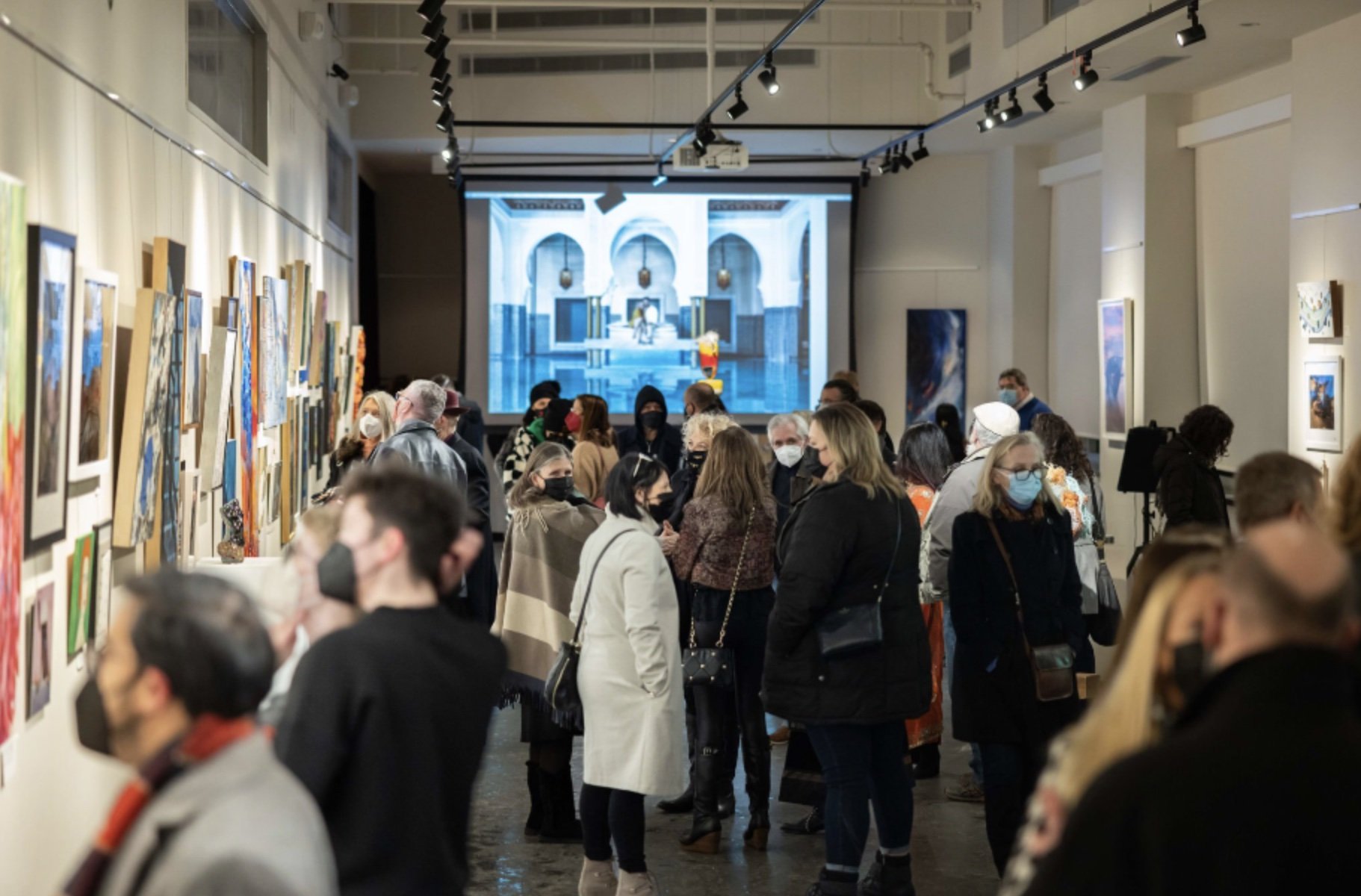
Origin, Juniper Rag’s 1st live exhibition, at the end of Covid-19. Worcester, MA , Photo: Mike Hendrickson
For years, Juniper Rag has observed that some of the most meaningful forms of artist support happen outside traditional institutional settings. It is the reason for our conception. While museums, galleries and arts organizations remain essential pillars of the creative ecosystem, artists themselves are often the ones building the connective tissue that sustains vibrant communities. These relationships are formed through countless acts of generosity, collaboration and mutual encouragement that rarely make headlines but have a profound impact on artistic careers.
One of the most common ways artists support one another is through peer-to-peer advocacy. Artists regularly share exhibitions, open calls, publications, and accomplishments across their networks, helping fellow creatives gain visibility and reach new audiences. What may seem like a simple social media post or recommendation can often lead to new opportunities, exhibitions, sales, or professional relationships. Rather than viewing one another as competitors, many artists recognize that a thriving arts community benefits everyone. We have seen the collective results first hand. Many times.
Juniper Rag is also interested in the growth of informal groups, mentorship circles and building a studio visit network that exist entirely outside formal programs. We operate independently and are not beholden to any organization. Our spaces allow artists to exchange ideas, receive honest feedback, and discuss the realities of sustaining a creative practice. Often, these conversations provide insights and encouragement that cannot be tracked or replicated in more structured environments. They are purely organic and magical. Over time, these connections evolve into trusted relationships that support artists through both successes and challenges.
Collaborations are another powerful force for us in our communities. Artists frequently invite one another into exhibitions, publications, virtual projects, and creative experiments. These partnerships not only expand opportunities but also foster a culture of inclusion and shared growth. Resource-sharing is equally common, whether it involves recommending printers and framers, exchanging grant information, sharing professional contacts, or offering guidance on marketing and presentation. Corporate collaborations are what validates Juniper Rag in the broader art community. Our work with local arts organizations has made so many lasting relationships and helps us to grow, help more artists and also, to help the organizations meet their goals. We have become known for our strategic collaborative projects whether is it brining art to Mechanics Hall, assisting with fundraisers, curating themed experiential exhibitions, like Delirium for Hanover Theatre or guest jurying exhibitions, cross pollination is always a great idea, especially when both parties ambitiously use the momentum of the events together on social media, in press releases and encourage all participants to do the same.
Perhaps one of the most inspiring trends is the willingness of artists to celebrate the achievements of their peers. Attending openings, purchasing artwork, writing recommendations, and amplifying milestones are all ways artists actively contribute to one another's success. These actions help create a culture where accomplishments are viewed as collective victories rather than individual competitions. Artists “show up” for each other, even in their absence by sharing online.

Julia CR Gray speaking with artist John Pagano at a reception in Worcester, Massachusetts. Across the Table Photo Credit: Stephen DiRado
The rise of digital platforms like Juniper Rag has further expanded these possibilities. Through virtual exhibitions and online communities, artists from different regions from all over the world are forming meaningful relationships that often lead to collaborations, friendships and professional opportunities. What begins as a conversation online can develop into real-world partnerships and lasting connections. We hear about it all the time. Julia C. R. Gray, a San Diego sculptor took a chance on us and drove across the country to participate in a show in Provincetown with Juniper Rag our first year. Her effort, her drive and her creative force was felt by all. After the show closed, she came back up to central Mass where we had a reception for her at our home for all the people that could not make it down to the exhibition. Julia now has a firm community of artists that she personally knows, just because she took a chance.
At its core, the strongest support artists offer one another is a sense of belonging. Creative work can often feel solitary, uncertain, and challenging. Knowing that others understand those experiences—and are willing to offer encouragement, advice, or simply show up in support—creates the foundation for resilient artistic communities.
Juniper Rag continues to see that some of the most impactful creative ecosystems are built artist-to-artist, through shared effort, curiosity, and a commitment to lifting one another up.
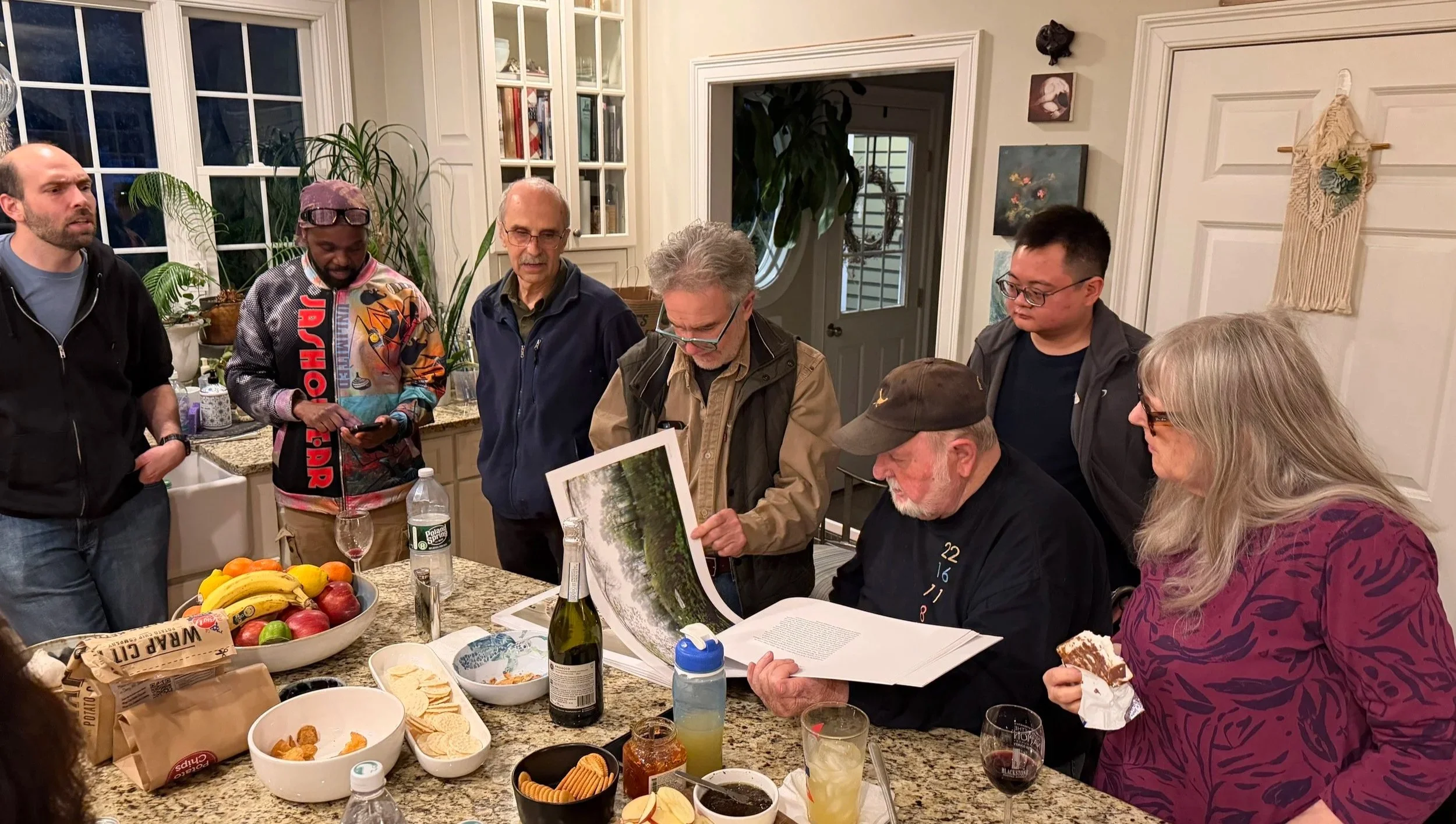
Salon: Photographers, Eric Nichols, Ricardo Barros, Stephen DiRado, Frank Armstrong, Hoang Truong, and painter and sculpture artist Abu Mwenye (2nd from left) with Cate Smith, ceramacist.